© Patricia Lovett MBE 2026
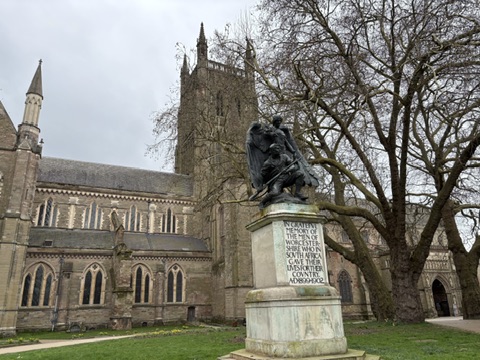
Prince Arthur, son of Henry VII and Elizabeth of York, and his wife Catherine of Aragon, the Spanish princess, travelled to Ludlow Castle after their marriage, both were age 15. While there, they caught the ‘sweating sickness’ and sadly Arthur died and as a result his younger brother, Henry, became the heir to the English throne; Catherine survived the illness and went on to marry Henry, becoming Queen as a result. Arthur’s final resting place was Worcester Cathedral where this magnificent Chantry Chapel was erected to house his body and have prayers said for his soul. The fineness of carving and magnificent tracery are breathtaking.

© Patricia Lovett MBE 2026
His name alone indicates the hope that Prince Arthur held and it must have been devastating for that expectation to be dashed by his death. After he died Arthur was brought to Worcester Cathedral in a large horse-drawn ‘charre’ (chariot?), his body having lain in state for three weeks at Ludlow. The ceremony surrounding his funeral was documented in detail – his body was carried with due ceremony under a rich canopy into the Cathedral and peers, officers of arms and others kept watch over the body during the night. The outside of the Chantry has many related carvings – here are the white rose of York for his mother, surmounted by two ostrich feathers indicating that Arthur had been made a Knight of the Garter. To the right are the arms of Prince Arthur consisting of the Royal Arms with the fleur-de-lis of France in the first and third quarters indicating the claim England had on lands in France; a label for difference is at the top of the shield. The supporters are two stags, or white harts, relating to his predecessor Edward IV.

© Patricia Lovett MBE 2026
The outside tracery looks just as stunning from the inside – with delicate narrow pointed arches ending in a trefoil design, supported on the finest of columns. The masons came from Westminster Abbey to create this, where they had been working on the chapel for Henry VII. At the bottom of this image is the top of the tomb of Prince Arthur.

© Patricia Lovett MBE 2026
The tomb itself looks relatively bare for such an important Prince. With a quatrefoil decoration at each end and an inscription round the upper edge, the top is blank. It is thought that there was going to be a bronze effigy of the Prince here by the Italian sculptor Torrigiano who did one on the tomb in Westminster Abbey of Henry VII, and indeed that the stonework would also be painted, but those plans fell by the wayside when Henry VIII married Catherine and to a large extent poor Prince Arthur was quietly forgotten.

© Patricia Lovett MBE 2026
At one of the shorter ends of the tomb (just visible above) place within a carved quatrefoil is a painting of the Royal Arms on a shield. The stone tracery around it is particularly fine.
© Patricia Lovett MBE 2026
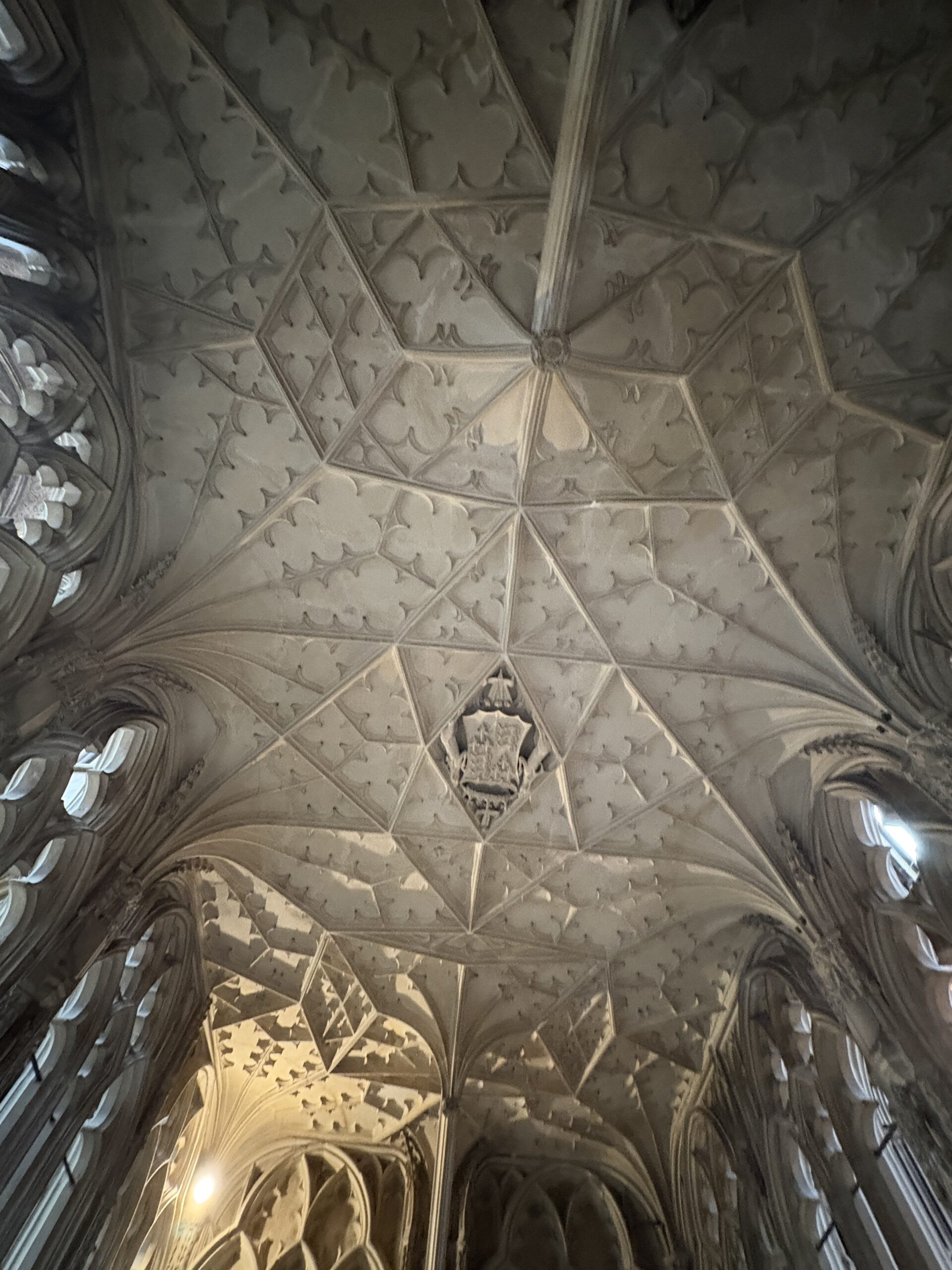
And just look at this ceiling! What amazingly delicate carving with pointed and curved ended trefoils, quatrefoils, and multiple semi-circular shapes in the supporting ribs.
© Patricia Lovett MBE 2026
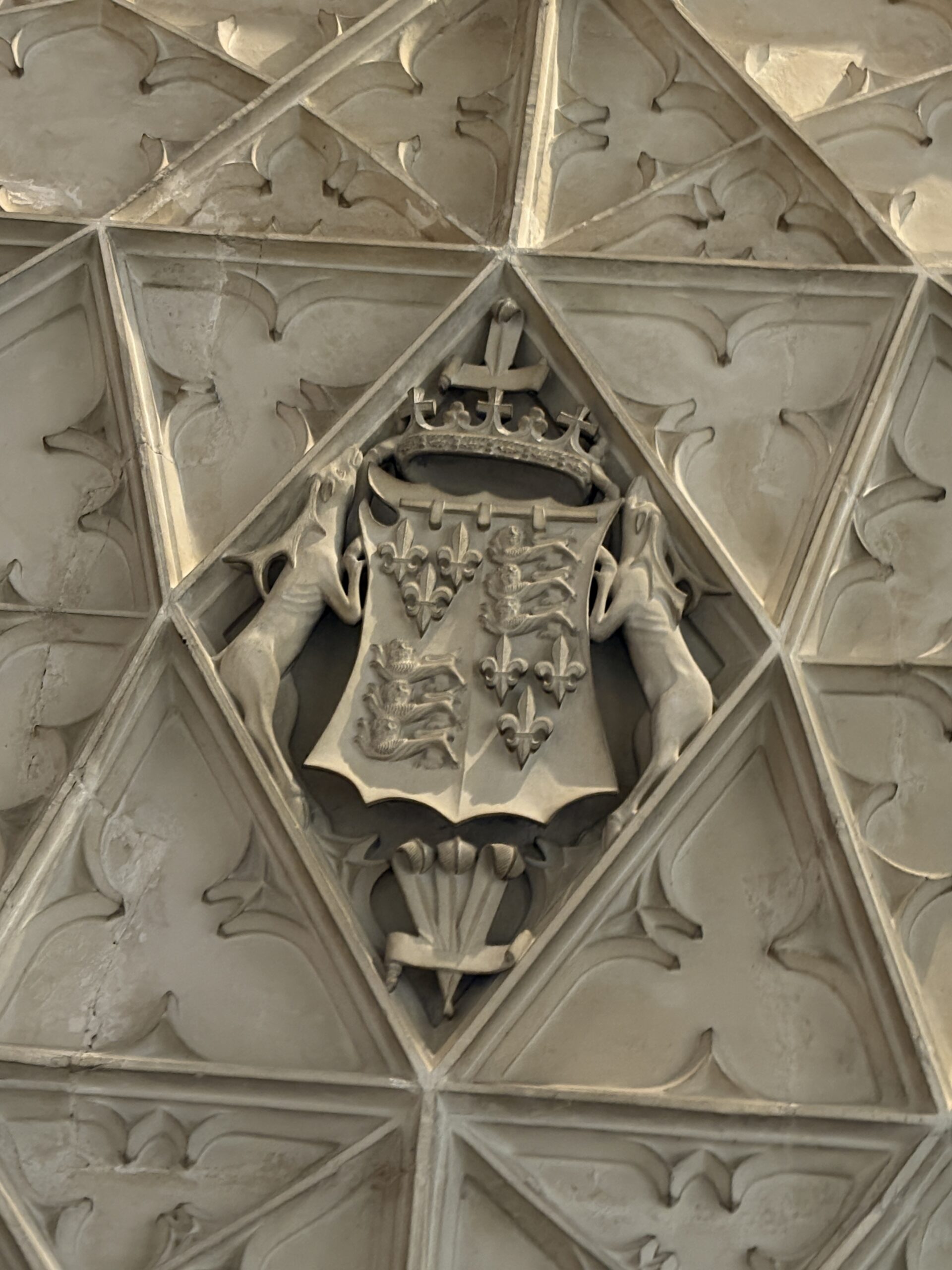
Centrally above the tomb is a finer carving of Prince Arthur’s coat of arms. The three feathers of the Prince of Wales are at the bottom of the shield, and the supporters are again the stags. As a royal, he bore the Royal Arms but at the top is a label – a white horizontal strip – this indicates that there is a difference and identifies him separately from his father who wouldn’t need that label. In Prince Arthur’s case it has three pendants.
© Patricia Lovett MBE 2026
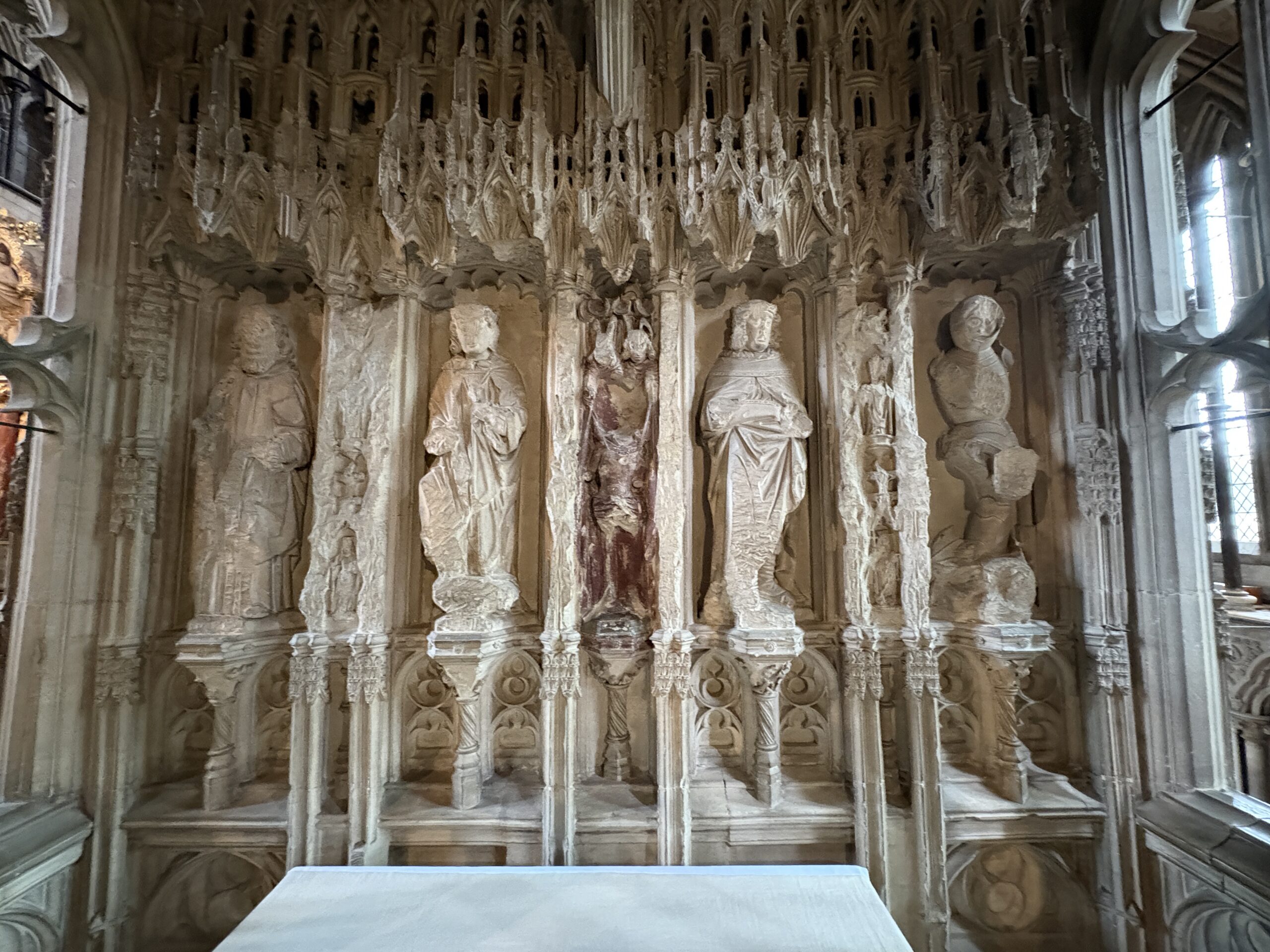
At the head of the tomb is a wall of sculptures with the most delicate carving above. The figures were damaged during the reign of Edward VI, Henry’s son and Arthur’s nephew.

© Patricia Lovett MBE 2026
Many prayers must have been said for the Prince if the indentations on the floor are anything to go by – to wear away stone as much as this there must have been considerable footfall!
If in the area Worcester cathedral is well worth visiting, if to view the amazing craftsmanship on this Chantry alone.