
 King John really hasn’t got a good press, especially compared with his older brother, Richard the Lionheart of Robin Hood fame, John just doesn’t have that same star quality, despite him being the favourite of his father, Henry II. As the youngest son of Henry and Eleanor of Aquitaine, he wasn’t expected to either inherit significant lands – leading to his nickname ‘John Lackland (Jean sans Terre) – nor to become king as he did in 1199.
There are reasons for his unpopularity of course, John lost much of the land ruled by the English in France and raised heavy taxes for military campaigns to try to get it back. And then there is the famous Magna Carta, sealed, not signed, at Runnymead, forced on John by his nobles.
 John died of dysentery while on a campaign in eastern England and died in Newark on the night of 18–19 October 1216. His wish was that he should be buried at Worcester Cathedral so that he could be near the shrines of the Anglo-Saxon saints St Oswald and St Wulfstan, and small effigies of the saints appear next to him on the top of his tomb – one of them is just visible by to his head. His complete tomb, looking back down the nave is above.
 John’s funeral is depicted here in a later British Library manuscript (Egerton MS 3028, f.6r) where the text also states that John was buried between his two favoured saints. The image, though, doesn’t show the many mounted knights in armour who accompanied John’s coffin to its final resting place.
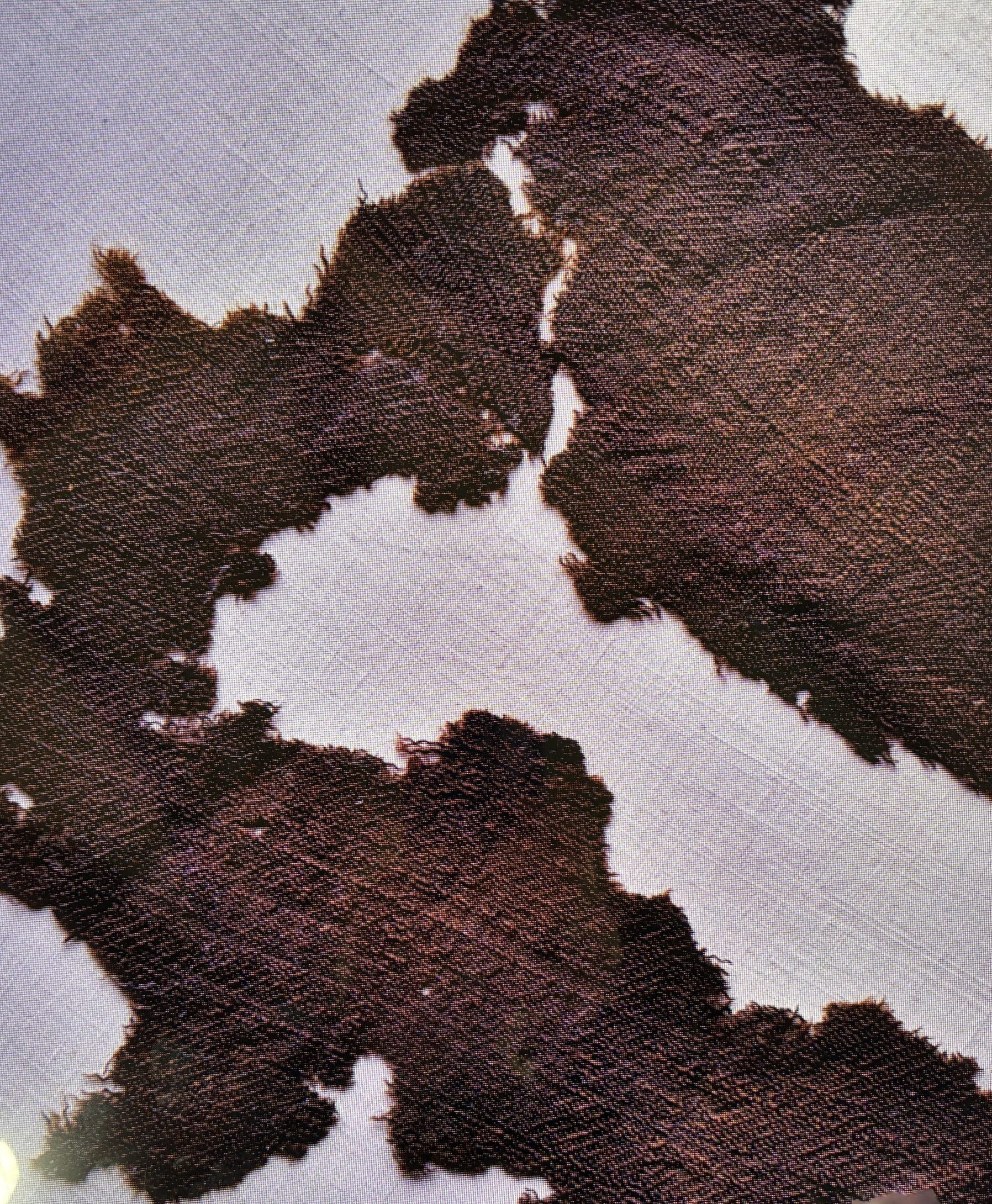 When John’s tomb was opened they found that some of the textiles had amazingly survived. These fragments are of the fine hose in which he was buried. The fabric is so fine that it’s difficult to know whether they were made from woven material or knitted.
 Another piece of fabric is this beautiful embroidered cloth, it shows a lion (the lion of England?), in raised stitches, with gold and silver thread on the head; this was wrapped round John’s body.
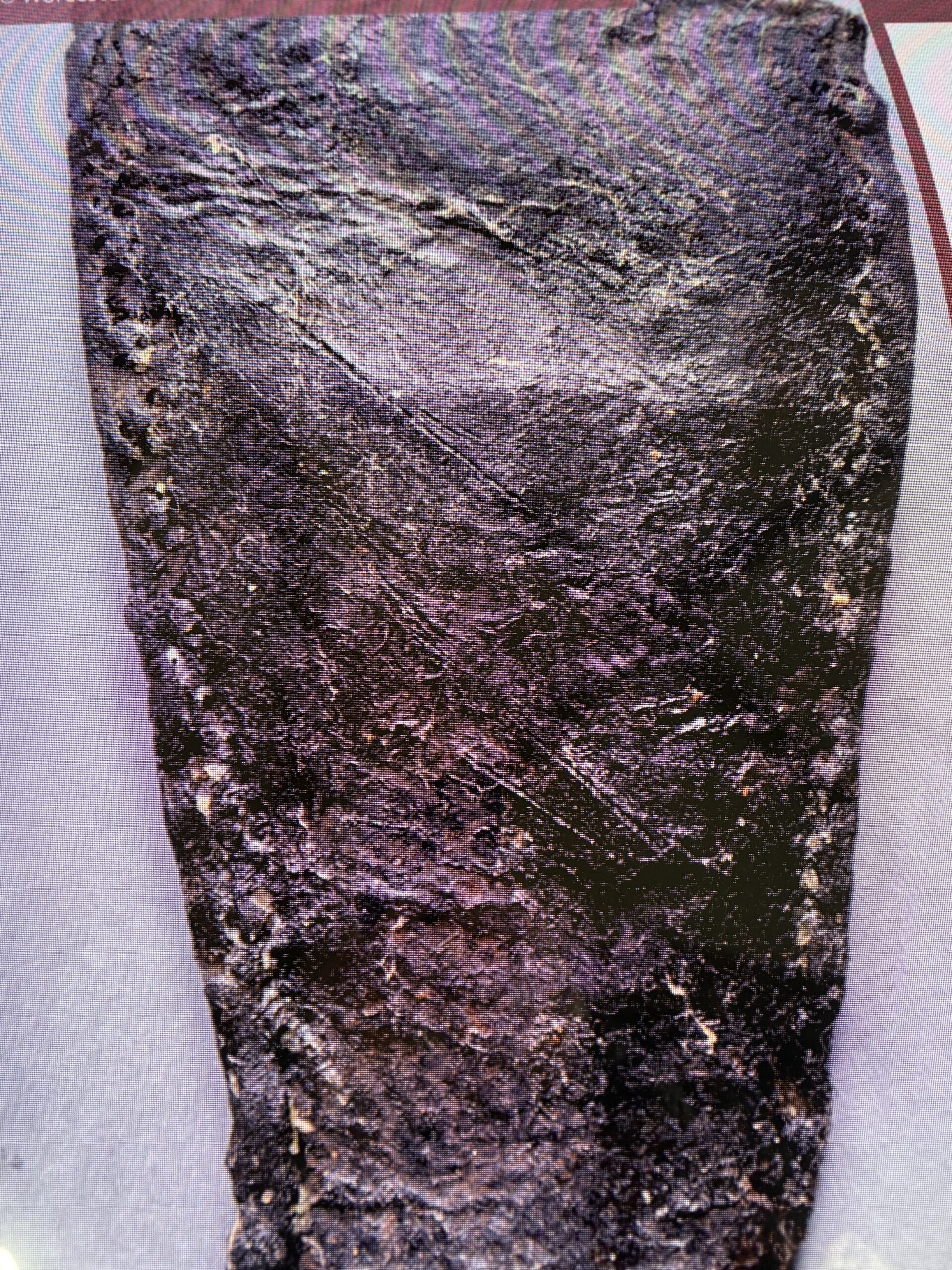 And this is the sole of one of his shoes; it’s made of leather and there are clear indications that not only has it been worn – it looks quite rough and the stitching shows wear and tear – but there is even an indentation as the shoe moulded round his feet!
 The glorious tiled pavement looks mediæval with its terracotta background and yellow pattern, but they are in fact Victorian and designed by Sir George Gilbert Scott and made by the firm Godwin of Lugwardine, the design being copied from the surviving historical tiles. It does give John’s rather sombre chest tomb a colourful background.
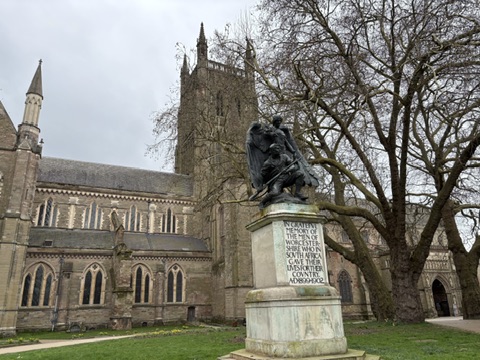 It does seem quite amazing that this historical tomb has survived since 1216 and so, too, the artefacts found within it.
All photographs © Patricia Lovett 2026


