Author Archives: Patricia

All Party Parliamentary Group for Art, Craft and Design Education

westminster hallVisiting the Houses of Parliament is always a privilege. It is not all as originally mediæval as I would like, in that only Westminster Hall, begun in 1097 by William II (William Rufus), and ready two years later, has original features. But the work by the architects Barry and particularly Pugin in the nineteenth century, after the fire that destroyed much of the original building, means that it definitely all has a very Gothic slant, and it is always a joy to be surrounded by such history and such rich design.

photo copy 10I was delighted, when I went to my first meeting of the APPG for Art, Craft and Design Education to see hand-craft at work. Just at the top of the main steps from Westminster Hall (the top of the picture above) they were re-laying the tiles to the pavement. This showed great craftsmanship in that the right mix of mortar, the right amount to be laid, and the correct pressure in tapping a wooden mallet all needed great skill. The designs reminded me when I was learning heraldry of the ways in which we had to fit lions and other heraldic beasts into particular shapes without losing the character of the animal (this was when I learned calligraphy and illumination as well). Notice that the lions in the square tiles above have four legs, swirling tails, heads etc etc but still fit into the shape.

photo copy 11I arrived very early for the meeting because of train times, and noticed a piece of M C Oliver’s calligraphy in the Central Lobby explaining the designs in the mosaic situated in the wall above this text. The lettering style is very typical for the period and written in a strong hand on stretched vellum. I am not sure whether we would find his very closely textured lettering with potential clashes of ascenders and descenders and tiny margins acceptable nowadays!


But I was there to represent craft and the Heritage Crafts Association at this committee and so had this to focus on. Chaired by dynamic Sharon Hodgson MP, Shadow Minister for Women and Equality, and supported by NSEAD, the agenda was wide-ranging. After the first item I was able to give a brief introduction to heritage crafts and the Heritage Crafts Association, mentioning some of our challenges. Other items covered were the Art Party Conference, and a fascinating insight into art, craft and design education by HMI Ian Middleton who mentioned two reports: Making a Mark, and Drawing together: art, craft and design in schools. Ian is also Ofsted’s National Lead for Art, Craft and Design in Education. The problems of Discount Codes for children choosing subjects to study for GCSE were also raised and it seems that subjects in the arts and crafts were most hit. A student could take Maths and Stats for example, with both subjects counting for school published statistics, but taking photography as well as design, or graphics and design, would count as only one subject when schools added up their GCSE successes. This is not likely to encourage take up of art, craft and design subjects! Yet these subjects involve different disciplines and were usually taught by different specialists (unlike Maths and Stats). The UK has some of the best innovators in the world in terms of designs and craft. Encouragement at all levels should be happening, not discouragement for reasons of statistics! The NSEAD proposed Day of Action was also raised. This is likely to be on June 14th and is an opportunity for art, craft and design teachers and amateur and professional practitioners to take their skills to the community and to schools to give everyone a chance to experience the skills involved.

It looks like a group keen to raise issues and get answers, and will certainly add to the excellent work being done by the Craft Industry Board.

Llandaff Cathedral – lettering heaven!

Llandaff CathedralLlandaff Cathedral is situated on one of the oldest Christian sites in Britain, and was founded where the River Taff was crossed by the Roman road. The present cathedral building dates from 1107 when the first Bishop appointed by the Normans, Urban, replaced the earlier church.


Norman arch

There is evidence of this church in two arches, one to the St David Chapel, shown on the right, and also the arch behind the high altar. The characteristic zig-zag pattern of Norman architecture is shown clearly here, as well as the beautiful semi-circular Romanesque archway. Note the figure of the head at the centre of the arch. This archway may have been the original west doorway.


Jasper TowerThe North West tower, called the Jasper Bell Tower was established by Jasper Tudor in the fifteenth century, and is named after him. Those who followed The White Queen series on tv last year may remember that Jasper Tudor was the husband of the Lancastrian Red Queen, Margaret Beaufort, and they were both the parents of Henry Tudor, who became Henry VII (father of Henry VIII), the founder of the Tudor dynasty.


Christ in Majesty, LlandaffA period of decline of pilgrims and supporters of the church resulted in the structure decaying, and a bomb destroying the roof in the Second World War did not help! A revitalisation of the church since then has taken place, including the wonderful Epstein Christ in Majesty, supported on huge concrete arches – quite a stunning sight!


Llandaff CathedralBut it is the wealth of wonderful lettering that caught my eye when I visited. This is the lively cut lettering in the Welsh Regiment Chapel, and records their campaigns. This is an interesting style of Roman Capitals, which are not always consistent in height (note the letter T in the top line). As well as this, the convention is that the numerals, when capital letters are used, should echo the x-height, but here the number 1 is higher than other numbers on occasion, and the other numerals are ranged (vary in height) rather than being consistent. The overlapping of letters, as shown here is an attractive and eye catching feature of these panels, as is also the painted red colour.


Llandaff CathedralThe overlapping letters, however, do not always work, in my opinion, where legibility seems to give way to style, as in this panel. The space at the base for an additional line may have eased the somewhat awkward combinations of letters on the bottom line. The letters were cut by ‘Mr Kaye of York’, but I have not been able to find any more information about him.


Llandaff CathedralThis stunning cast metal lettering is really eye catching, standing out from the wall as it does. The round rivet fixings of the horizontal metal struts make a satisfactory ‘dot’ to emphasise word separation. The slight overlapping of letters here and there does not hinder legibility. The problem with having a block of text centred like this is that the eye is often caught by the shape of the lettering, rather than what the words say. This is not the case with this lettering, and the whole effect is very pleasing indeed. This lettering is by Frank Roper.


Dean Williams plaqueThis simple, yet most effective slate plaque to Dean John F Williams was cut by Alec Peever. It looks very classic, and the various elements of the plaque are positioned perfectly. Remember, in Italics at the top, leads in to the name, with the surname emphasised in capitals with the letters spaced so that this line is the widest of all. And at the base, Lord, on a separate line, gives greater emphasis to this word, and creates a visual as well as an actual pause.


Llandaff CathedralA high standard of lettering continues with the plaques to denote the seats of various officers of the church. These are beautifully executed in painted brush letters with wonderful flourishes. Sadly we know only that these were provided by the architect in 1994, and although I have tried to find out whether ‘R H M’ indicates the lettering artist, I have not been able to do so.


Llandaff CathedralThis strikingly designed combination of four panels of the Bishops and Deans of Llandaff Cathedral is made all the more eye-catching by the supporting wooden struts. So often panels like this are simply attached to a wall individually. This combination makes it almost an artwork of its own. The lettering is by calligrapher John Smith.


IMG_0878

The work is on vellum in blue, red and black lettering.


I am most grateful to John Bethell, Honorary Cathedral Archivist, for supplying information about the lettering at Llandaff.

There are often so many examples of lettering in churches and cathedrals with rarely any indication of the craftsperson who executed it. Perhaps this could be the start of a campaign to record those whose work adds so much to the beauty of our places of worship.


Gold and Parchment in Sydney


photo copyThe highlight for me of our brief stay in Australia was the talk on Gold on Parchment that I gave at the State Library of New South Wales. The Australian Society of Calligraphers and the State Library had done a great job of advertising the talk. This (right) was in the Sydney daily paper. Although it was advertised as mainly for calligraphers, it was clear on the day that there were also people from the library itself, including conservators, and those interested in manuscripts and history.


State Library, NSWThe State Library is a beautifully light and airy modern building almost opposite the Botanical Gardens, right in the heart of the city of Sydney. There was a stunning exhibition of photography on display while we were there.

State Library NSW old building


On the day, though, the State Library realised that the room they had first allocated would be too small, and so they transferred the location for the talk to a larger room in the older library building. This was a wonderful red sandstone historical building looking out over the Botanical Gardens themselves, and a real landmark.

State Library, NSW

To get there we were taken through the library where there was a great mix of old and new, like this huge room lined with bookshelves and with a magnificent ceiling, yet with a modern glass staircase in the centre.


Gold on Parchment talk


The room was a large one, but it quickly filled, and in the end there were over 200 people with some standing at the back for the whole two-hour presentation!

 
Gold on Parchment in SydneyI was delighted that the short video of me cutting a quill, which I filmed the day before we left and then quickly imported into the Powerpoint presentation actually worked! There were interesting questions at the end, and I was delighted by the interest shown. Huge thanks are due to everyone involved in the State Library Events department (especially Samantha Hagan who kept very calm while we struggled to get the video clip up and working, and didn’t worry too much when we overran), and to the Australian Society of Calligraphers who were so welcoming and kind, especially Liz Firth who was my contact, and Bob Howe, the current President. I was even asked to do a repeat for the conservators, but sadly we were leaving the following day – perhaps next time!


Christmas or Xmas?

Chi rho from KellsThere was an article in the paper towards the end of last year which posed the question of whether people would have Christmas or Xmas. The suggestion was that Christmas would be a time of having a loving day with family and friends, caring and sharing, and Xmas would focus on the commercialisation of the season. In fact, Christmas and Xmas, as many know, are one and the same thing. X representing the Greek letter chi, which is the initial letter for Christ. In early manuscripts the names for God and Christ were thought to be so holy that they should be written not in Latin as the rest of the text but in Greek, the language of the early New Testament. These names were called the Nomina Sancta (holy names).

Chi rho in LindisfarneIn Insular Gospel books, at the end of the genealogy of Christ in Matthew 1:18, the page is often marked by large decorated initials, such as the one above in the Book of Kells. The letter chi is very large, followed by a smaller rho (looks like the letter p), and this is entwined with the letter i.

Contrast this with that in the Lindisfarne Gospels on the right, where again the letter chi is enlarged, but the letters rho and iota (i) are clearly visible, albeit smaller. The letters on the following line have been outlined in red dots, but are unfinished. Then follows beautifully painted angular letters with colours that bring a subtlety to the whole page. Note, too, the unfinished letter C towards the end of the third line.

Chi rho in St Gall Gospel Another insular book is the St Gall Gospel shown on the right. St Gall in Switzerland has a famous library with many manuscripts online. It is certainly worth looking at for early books. This Gospel was written by Irish monks around the year 750. The manuscript has the distinctive decoration of many of the books of this time, with, in a strip at the base, interlace, and decorating the space between the chi and the rho, La Tene swirls and geometric decoration.


Chi rho from Stockholm Codex AureusThe Stockholm Codex Aureus has a well-known history, being written probably in Canterbury in the mid-eighth century. It was stolen by the Vikings, its elaborate, decorated cover ripped off, and then bought back ‘with much gold’ by Alderman Alfred and his wife Werburgh to present to the church. There is a note to this effect written in Old English in two lines at the top of the page and continued at the bottom.

The Lettering and Commemorative Arts Trust

SundialThe Lettering and Commemorative Arts Trust is now based at Snape Maltings, near Aldeburgh in Suffolk, and it is wonderful to have a showcase for all the excellent work that this charity does. It was set up as a result of the founder, Harriet Frazer MBE, not being able to find a suitable memorial for the untimely early death of her stepdaughter. Many people want a stone cut so that it is personal to a special memory, and working with a craftsperson in creating something unique and beautiful often helps in the bereavement process.

memorials_1689429c
Memorials don’t have to be rigid and conventional rectangular stones. This one by Gary Breeze celebrates the life of a gardener, and so is attached to a living tree.

They also, as on the right, don’t have to be in a churchyard. Some memorials are in gardens, and may even be portable, so they can be moved from house to house with the owners if necessary.

OLYMPUS DIGITAL CAMERABut the Lettering and Commemorative Arts Charity is so much more than simply acting as agents to put lettering artists and patrons in touch with one another. To enable people to see what is possible, there are now six sites for the Art and Memory Collection, from Canterbury in the south to Pitlochery in Scotland, where you can see the variety and inventiveness of those who work in this medium. This wonderful Stone Ring is by Dave Crowe in Arnos Vale.


Monnow-Valley-Geoff-AldredLetter cutting is a heritage craft, and like similar crafts, if efforts are not made, the skills and techniques to prepare stone and wood, design and cut letters will be lost. So the Lettering and Commemorative Arts Trust not only runs short courses at its base at Snape, with the very best tutors, but also seeks to arrange full time apprenticeships so the learners can immerse themselves in the workshop experience. Of course, funding is not easy for these and the Lettering and Commemorative Arts Trust is working with the Heritage Crafts Association to ensure that this craft, developed in ancient times, can continue into the future.

I feel very proud to be a Patron of this most worthwhile charity.


The Dering Roll

Sir Edward DeringThe Dering Roll is the oldest roll of English coats of arms and dates from 1270–1280. In the seventeenth century it was acquired by Sir Edward Dering (1598–1644) (right), from Dering in Kent, who is described as a knight and a baronet. He bought it in the seventeenth century, and although it seems dreadful to us now, he ‘modified’ the roll to include a fictitious ancestor of his own. While Dering was lieutenant of Dover Castle, he removed entry number 61 on the roll, the coat of arms of Nicholas de Croill, and put in his own arms with the false name of Richard fitz Dering in its place. This was to prove the ancestry of his family.


Dering rollIt is thought that the roll was commissioned by the Constable of Kent, Stephen of Penchester, which would explain why there are more coats of arms from Kent and Surrey than from elsewhere.

The roll itself starts with the two illegitimate children of King John (1166–1216, king from 1199 to 1216) who were Richard Fitz Roy (fitz = son, roy = king) and William de Say, although their coats of arms at the top are difficult to discern because of the condition of the roll.

Dering rollMade from four strips of 8 inch wide parchment pasted together, and stretching to almost three yards in length, it is a huge piece of work, and it’s remarkable that it has survived so well. The shields are arranged six to a row and there are 54 rows, making 324 shields in all. All but five of them have the individual names of the knights written above them. These names have either been removed or were never written in in the first place. The background to the colourful shields is painted green.

NPG x166117; Sir Anthony Wagner by Godfrey ArgentIn the twentieth century it was bought by Sir Anthony Wagner (right) who became Garter King of Arms at the College of Arms in London. It was sold at Sotheby’s in 2007 for £192,000 and was due to be exported from the country. A stay of execution meant that the British Library were able to raise the sum of £194,184 to ensure that it stayed in the country. The importance of this heraldic roll is summed up by the Head of Mediæval and Earlier Manuscripts, Claire Breay, who said of the purchase, ‘the acquisition of the Dering Roll provides an extremely rare chance to add a manuscript of enormous local and national significance’.


Sheila Waters at Eighty – A Retrospective

Sheila Water's work

Please note: I am not now selling this book but have left the post up for interest.

This wonderful 50-page book was published when Sheila Waters was eighty, and encapsulates the incredible range and amazing creativity of her work. As written by her son Julian in the introduction: ‘Much more than a catalogue, this is the story of an artist, a part of family history and a snapshot in the timeline of the modern history of art and design’.

Perhaps Sheila is best known for the intricate designs and patterns with pure black Roman Capitals such as that on the right. These were developed by her for the title page of the book she created using the text of Dylan Thomas’ Under Milk Wood.

Sheila Waters artworkThis led directly to the Roundel of the Seasons, which took Sheila over one thousand hours of concentrated work. Although she almost gave up on this piece when the central portion and the surrounding flowers were too dense (see right), encouraged by her husband Peter, the renowned book binder, she scraped out several weeks of work and replaced this section with calligraphy. Such a brave move!


Sheila-WatersBut this Retrospective does not rest there. It also includes Sheila’s later work, and some of the spontaneous pieces she has done for her granddaughters.

As well as this there are examples of Sheila’s maps and the collaborative work she did with her husband, Peter Waters, designing for the books he bound. And so much more …

The book is simply beautiful – set in a typeface specially designed for this by her son Julian, and based on the modernised Caroline minuscule she developed and used in her Under Milk Wood – the whole publication is just a joy. I cannot recommend it more highly.

Copies are available directly from Sheila Waters in the USA.

Heritage crafts and a National Honour

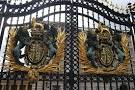
Buckingham Palace gatesA great day for heritage crafts – the first national honour was awarded today, and what a day that was!


photo copyWe had been advised to get there early, and so we were, and queuing with Brian Rea, from Northern Ireland Policing, and his family, at one of the wonderful Buckingham Palace gates.

Fortunately it was a fantastic day. Last night there were gale force winds and horizontal heavy rain. If this is the weather tomorrow, I thought, my hat will be flying off my head and be completely ruined!


BUCKINGHAM PALACE LOOSOnce we had had our tickets and passports checked, we were led through the central archway of Buckingham Palace and into the building itself. Then we were directed to the cloakroom and loos – the latter quite extraordinary. Vast wooden seats covered a rather ancient loo, with a wooden ‘stirrup’ pull up handle instead of a chain or lever.


Access_BP_grandstairs_lgThen up an amazing gilded staircase, where guests/family went one way and recipients the other. We were led into the picture gallery, and once our names were checked, a hook was pinned to our jackets. This meant that when the medal was awarded, it was simply looped on to the hook.


Picture GalleryThe picture gallery was stunning – if only we could have just looked at the wonderful art – but there were so many interesting people to meet and find out why they were being awarded honours. They ranged from Pamela Goldberg who got hers for the Breast Cancer Campaign, Wing Commander Teresa Griffiths, who is doing sterling work at Birmingham Hospital with those who have been injured in conflicts, Christine Edwards for Higher Education, and our celebrity Adele (Adkins), the singer.

First Football Match In Buckingham Palace Gardens To Celebrate 150 Years Of The Football AssociationThe awarding procedure was then explained to us – not too complicated – and we were then told to wait until our names were called. We were taken out in batches, through some wonderful rooms, and then led across the back of the huge ball room to a parallel corridor and were checked yet again at the entrance to the ballroom. One by one our names and awards were announced. Forwards, stop, curtsey/bow, forwards to The Prince of Wales, medal awarded, chat and then go. (picture on right is of the Duke of Cambridge presenting awards earlier this year). It was a thrilling moment, not least because, coincidentally, In Paradisum, from Fauré’s Requiem, one of my favourite pieces of music, was played by the orchestra just as I went forwards for my award.

The Prince of Wales, President of the Heritage Crafts Association, was charming, as indeed he was to everyone I spoke to afterwards. He was interested in what we were doing and very supportive. Once out of the ballroom, I did give a little jump of celebration, but then remembered that there were video cameras everywhere (you could buy a film of your own presentation) and hoped they didn’t catch that rather non-MBE behaviour! The hanging pin was removed for us, and the medal was put into a smart box, then we were shown to the back of the ballroom to watch the remaining people being awarded.

When everyone had received their awards, The Prince of Wales left after the National Anthem, escorted by ghurkhas, and the Yeoman of the Guard marched out.

Patricia Lovett and her MBEI met up with my family in the Ballroom, and took my medal out of its box straightaway and pinned it on. As I said to the people as we walked out at Buckingham Palace – if you’ve got it, flaunt it! Then it was out into the courtyard for our photos.

This is the first time heritage crafts have been nationally recognised like this, and the first time for calligraphy for about forty years. The Heritage Crafts Association is working hard to nominate deserving traditional craftpeople for honours and we hope to see many more makers in future New Year and Queen’s Birthday lists.

And the singer Adele? Well apart from standing next to her and her smiling back in the picture gallery, and spotting her a few rows in front in the ballroom, we didn’t see her again. Speaking to the photographers they said that celebrities and VIPs are usually fast tracked through afterwards.

What a fantastic experience!

Durham Cathedral – place of saints

St Cuthbert's crossIt is said that St Cuthbert was the most revered saint in northern Europe before Thomas Becket was killed by the four knights in Canterbury Cathedral on 29th December in 1170. Cuthbert must have been a remarkable man for no other reason than Britain’s greatest treasure (in my opinion!) was written for ‘God, St Cuthbert and all the saints of the island’. This was, of course, the Lindisfarne Gospels, and they were written and decorated by Eadfrith, Bishop of Lindisfarne, before 720. St Cuthbert was buried with great pomp according to the custom, and in his coffin were placed not only the St Cuthbert Gospel, but also a small portable altar and his pectoral cross above right. This delicate little jewel was made of gold and garnets, and is in remarkably good condition.

Durham CathedralViking attacks made the monks move from Lindisfarne, and they took the Lindisfarne Gospels with other books and St Cuthbert’s coffin with them. The White Church at Durham was put up by the successors of those monks when it is said that St Cuthbert’s coffin stuck and refused to move any further. This church was replaced by the Norman Romanesque building, started in 1093. Amazingly that building took only 40 years to complete. This was because much of the work was done off site. The magnificently decorated huge stone columns had their patterns cut into them away from the church building, and they were assembled in the cathedral, each pattern fitting neatly in to the one above. This is explained here. The best view of the cathedral must surely be from the railway, and it is a wonderful sight as the train slows down into the station to view the cathedral on its high hill opposite.

St Cuthbert's ShrineSt Cuthbert’s Shrine itself is very plain and simple now, with a greenish stone slab and at floor level. A description of it as it was indicates that previously it was made of gilded marble. There were four spaces at the base where pilgrims could kneel to venerate the saint. The shrine was covered by a precious cloth (see below for a board painted according to a description of this cloth; this board now hangs over the tomb) and on special days this cloth would have been lifted so the coffin itself could be seen in all its glory.

It was not only his many miracles that mean that St Cuthbert was so revered. The story goes that when his coffin was elevated to the altar and it was opened, St Cuthbert’s hair had grown, there was flesh on his body and his joints were still flexible.

Durham CathedralIn fact, this continued right up until the Reformation when Henry VIII’s commissioners in around 1539 came to smash faces on tombs and strip the church of its treasure. An eye witness gives this account: Dr Ley, Dr Henley and Mr Blythman brought with them a goldsmith who, when he had taken off the gold and silver and precious stones, climbed up to a chest strongly bound in iron. The goldsmith took a hammer and smashed open the chest. St Cuthbert was ‘lying whole with his face bare and his beard as if it had a fortnight’s growth’. In smashing the shrine the goldsmith said that he had broken one of the saint’s legs. He was told to throw the bones down, but replied that this was impossible because they were still joined. 

Durham CathedralSt Cuthbert is not the only saint here. Bede, often known as the Venerable Bede, is regarded by many as the father of English history. He was born in around 672–3, and lived and worked around Monkwearmouth (now Sunderland) and Jarrow. He entered the monastery at Monkwearmouth when he was seven, and was taught by Benedict Biscop, and later by Ceolfrith, the Abbot of the twin foundation. Bede wrote over 60 books, including a little of his own life contained in a chapter at the end of his Historia Ecclesiastica, (a history of the church in England).

Codex LaudianusWe do still have a book that is said to have been owned by Bede. This is a sixth-century Greek and Latin manuscript of the Acts of the Apostles. It’s called the Codex Laudianus and is now in the Bodleian Library in Oxford. Latin is on the left and Greek on the right. It is written in Uncials, similar to the St Cuthbert Gospel, but these letter-forms are not as fine.

Bede died on Ascension Day in 735 and was buried at Jarrow. It is likely that Bede’s remains were transferred to Durham in the eleventh century. His tomb was looted in 1541, but it is thought that the contents were probably interred in the Galilee chapel at Durham where his tomb now stands.